

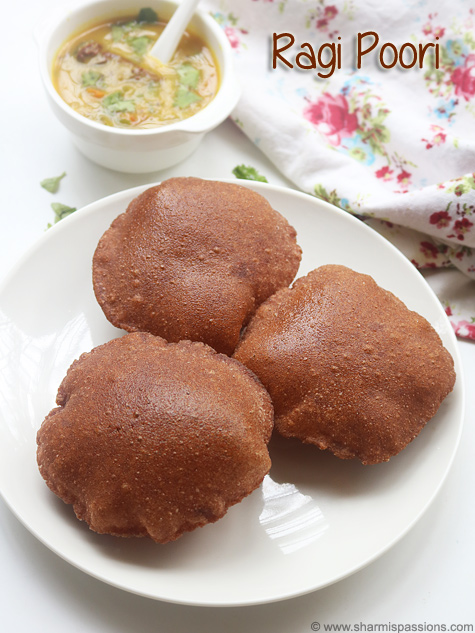
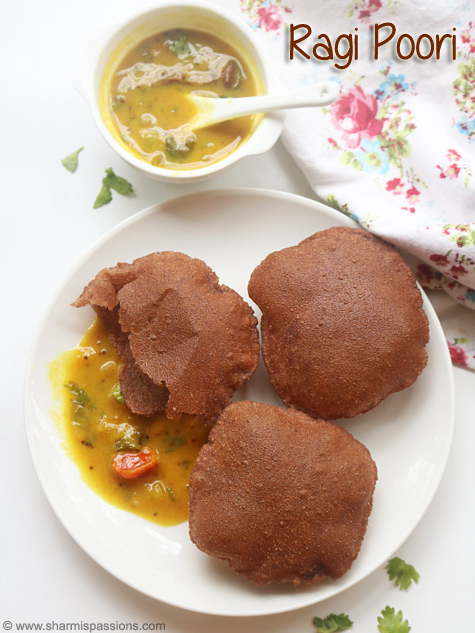
Ragi poori is a soft and nutritious bread made by adding ragi flour into regular poori dough. It comes out in a beautiful brown colour which looks very appetizing on the plate. It has a mild earthy flavour from ragi flour. It is a little different from usual poori because of the wholesome ragi flavour inside.
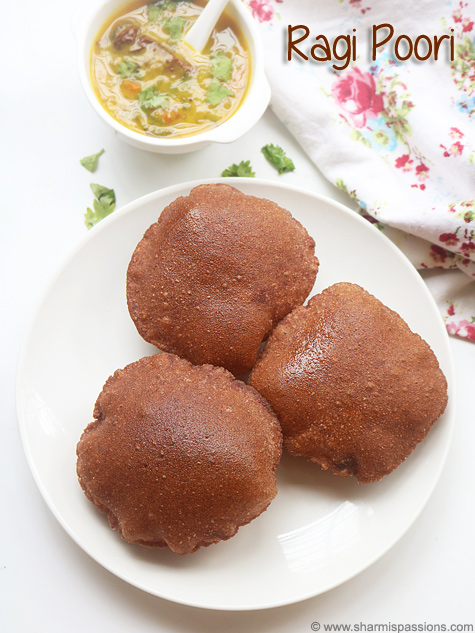
This is usually made when you want a healthier breakfast option instead of regular wheat poori. It makes a nice change for weekends at home. It feels light on the stomach and rich in calcium and fibre. It brings a healthy change to regular breakfast routine.
Jump to:
About Ragi Poori
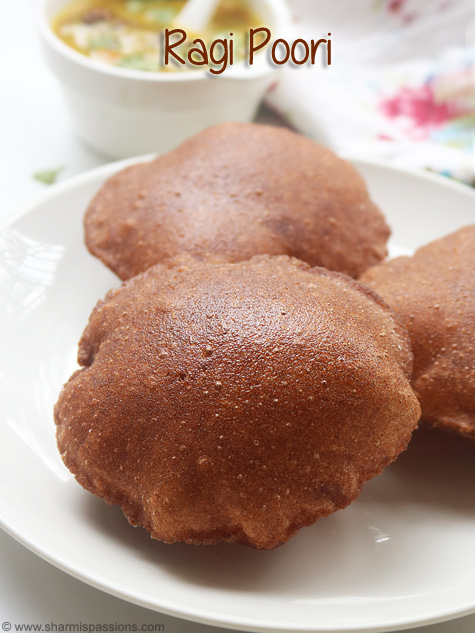
Ragi poori is a variation to the classic Indian poori. This is made with ragi flour instead of using only wheat flour, this small change make the poori looks more attractive and taste more wholesome. It is soft inside and lightly crisp outside.
The texture of Ragi Poori depends on the dough consistency. If kneaded soft and rolled slightly thick, the pooris puff up nicely while frying. The ragi gives a gentle earthy aroma which blend swell with wheat flour. The combination makes it different but equally delicious as regular poori.
There are small variations you can try with this recipe. Few people add roasted peanuts for crunch. You can serve it plain or pair with potato masala or even simple curd. It is flexible recipe which you can adjust based on your taste and preference.
I usually make ragi poori when I want something more nutritious for my family. Instead of making same wheat poori again, this feel like a different idea to try. My family enjoys it because it tastes fresh and has that homemade feel.
Similar Recipes
Ragi Poori Video
Ragi Poori Ingredients
- Ragi Flour - I use ragi flour as the main ingredient for this poori. It gives a nutritious, wholesome taste and makes the poori healthier than regular flour poori.
- Wheat Flour - I add wheat flour along with ragi flour to help bind the dough. It works together with ragi flour to create the right texture for the poori.
- Water - I add water little by little to knead the dough. You may not need the full quantity, so add slowly until the dough reaches the right consistency.
- Salt - I add salt to taste for flavour. It enhances the taste of the poori and balances the flavour.
- Oil - I use regular cooking oil for frying the poori. You can use any neutral oil for deep frying.
How to make Ragi Poori Step by Step
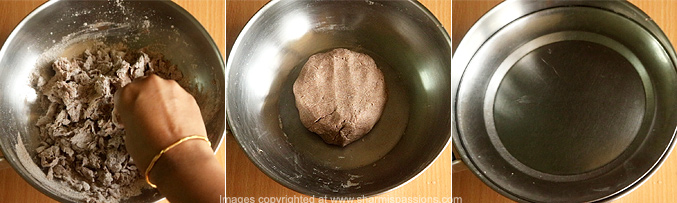
1.To a mixing bowl - add ragi flour, wheat flour and required salt
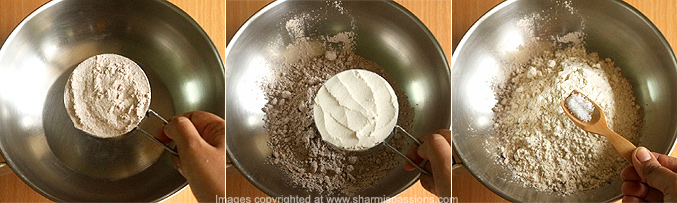
2.Mix well.Add water little by little and start kneading.
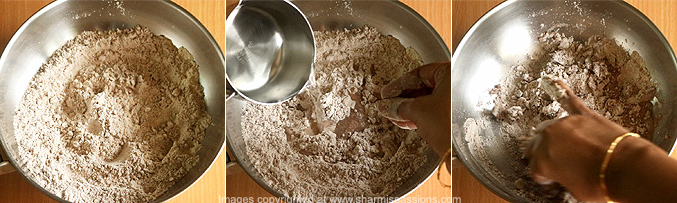
3.It took little less than ½ cup of water. Knead to form a smooth slightly stiff dough.Keep covered for 15 minutes. Then open and knead again once.
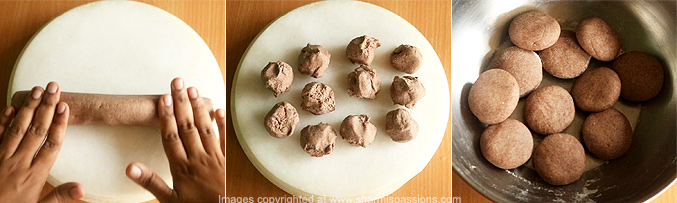
4.Shape the dough cylindrically then pinch small equal portions, make small balls and flatten them slightly.
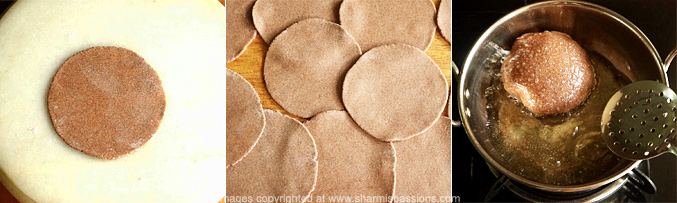
5.Flatten them into small slightly thick discs. Repeat to finish the dough.Heat oil - check by adding a pinch of dough if it rises immediately then oil is ready.Add a disc let it come up, them press using a ladle it will puff up fully. Then flip over and cook. Remove and carefully drain in tissue.
Serve hot with spicy masala.
Expert Tips
- Kneading - I make sure the dough is slightly stiff and firm. If the dough is too soft then the poori will absorb more oil while frying, so add water little by little.
- Resting - I just cover the dough and let it rest for 15 minutes before shaping. It helps the dough rest and make it easier to work with when making poori.
- Small portions - I divide the dough into small equal balls so all poori fry evenly.
- Oil temperature - I test the oil temperature by adding a small pinch of dough. If it rises immediately to the top, the oil is ready for frying.
- Press and flip - I add the flattened disc to the oil and let it rise, then press it gently with a ladle. This helps it puff up fully, then I flip and fry the other side until golden.
Serving and Storage
Serve this hot with potato masala, It also tastes nice with little jaggery sprinkled on top if you like it more sweet. It is best enjoyed fresh and hot directly from the pan. Store leftover pooris in an airtight box at room temperature for few hours. You can reheat it gently but it tastes better when had fresh.
FAQS
1. Can I add sugar?
Yes, you can add a little sugar for sweeter poori. Do not add too much as it may make the pooris brown fast while frying.
2. Can I skip salt?
Yes, you can skip it. Ragi itself give nice flavour and taste, so it works fine without salt too.
3. Why are my pooris not puffing up?
Dough may be too tight or rolled too thin. Also check oil temperature is correct and hot enough before frying.
4. Can I prepare dough ahead?
Yes you can make it a few hours in advance, keep it covered and avoid storing for too long in the fridge.
5. Can I use only ragi flour?
You can try but the dough may break apart easily. Wheat flour help bind the dough, so it work best with both flours together.
If you have any more questions about this Ragi Poori Recipe do mail me at sharmispassions@gmail.com. In addition, follow me on Instagram, Facebook, Pinterest ,Youtube and Twitter .
Tried this Ragi Poori Recipe? Do let me know how you liked it. Also tag us on Instagram @sharmispassions and hash tag it on #sharmispassions.
📖 Recipe Card

Ragi Poori Recipe
Ingredients
- ½ cup ragi flour
- ½ cup wheat flour
- salt to taste
- ½ cup water didn't use fully
Instructions
- To a mixing bowl - add ragi flour, wheat flour and required salt. Mix well.
- Add water little by little and start kneading.
- It took little less than ½ cup of water. Knead to form a smooth slightly stiff dough. Keep covered for 15 mins. Then open and knead again once.
- Shape the dough cylindrically then pinch small equal portions, make small balls and flatten them slightly.
- Flatten them into small slightly thick discs. Repeat to finish the dough.
- Heat oil - check by adding a pinch of dough if it rises immediately then oil is ready. Add a disc let it come up, them press using a ladle it will puff up fully. Then flip over and cook.
- Remove and carefully drain in tissue. Serve Ragi Poori hot with spicy masala.
Video
Notes
- Kneading - I make sure the dough is slightly stiff and firm. If the dough is too soft then the poori will absorb more oil while frying, so add water little by little.
- Resting - I just cover the dough and let it rest for 15 minutes before shaping. It helps the dough rest and make it easier to work with when making poori.
- Small portions - I divide the dough into small equal balls so all poori fry evenly.
- Oil temperature - I test the oil temperature by adding a small pinch of dough. If it rises immediately to the top, the oil is ready for frying.
- Press and flip - I add the flattened disc to the oil and let it rise, then press it gently with a ladle. This helps it puff up fully, then I flip and fry the other side until golden.



varshini
hi sharmi
Ingredient list missing
Sharmilee J
Thank you updated 🙂
Arthur Steele
Can you give an alternate to the wheat flour used in your recipe.?? I am on a no wheat no rice diet, so cant use this method.Could I use Amaranth flour?
Sharmilee J
yes you can